









Bridging the climate adaptation gap
Bridging the climate adaptation gap
Summary
- As climate change impacts intensify, climate adaptation has become a central focus and essential risk management strategy for countries and communities.
- Narrowing adaptation finance and climate data gaps will be essential to achieving the Global Goal on Adaptation and translating commitments into tangible adaptation action.
What is climate adaptation and why is it urgent?
Climate adaptation refers to a wide range of measures aimed at reducing vulnerability to climate change impacts, including extreme weather events, sea level rise, biodiversity loss, as well as food and water insecurity. Adaptation measures include building stronger defences against floods and heat waves, planting crop varieties that are more drought-resistant, and improving water storage and use.
The urgency is becoming increasingly apparent. The World Meteorological Organisation (WMO) reported that 2025 was one of the three warmest years on record, extending the trend of high global temperatures. The heatwave this summer broke monthly and all-time temperature records across several European countries and led to severe health impacts, including heat-related deaths. The past 11 years have been the 11 warmest years on record, and ocean heating also continues unabated, compounding risks to communities, ecosystems and economic activity.
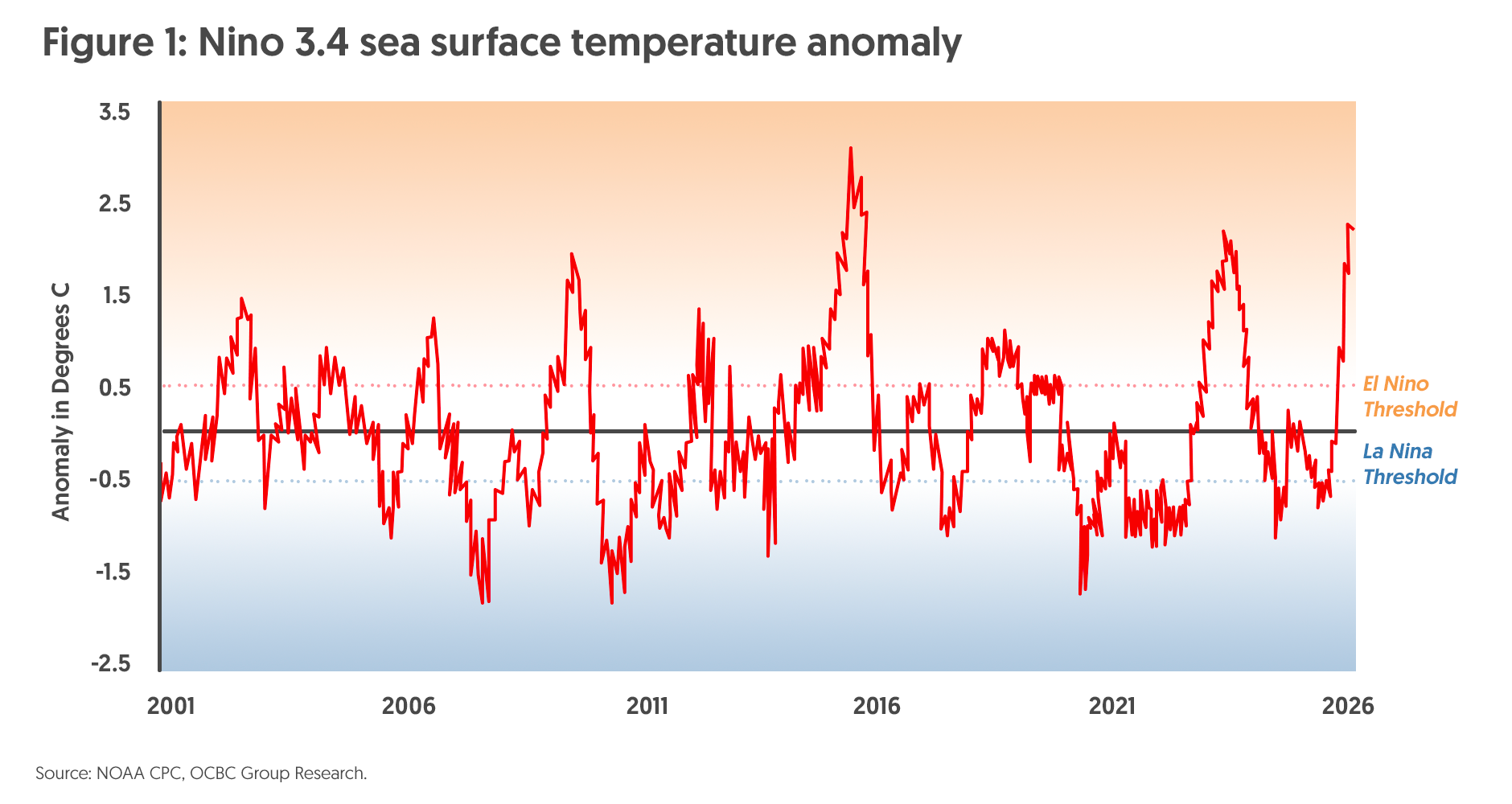
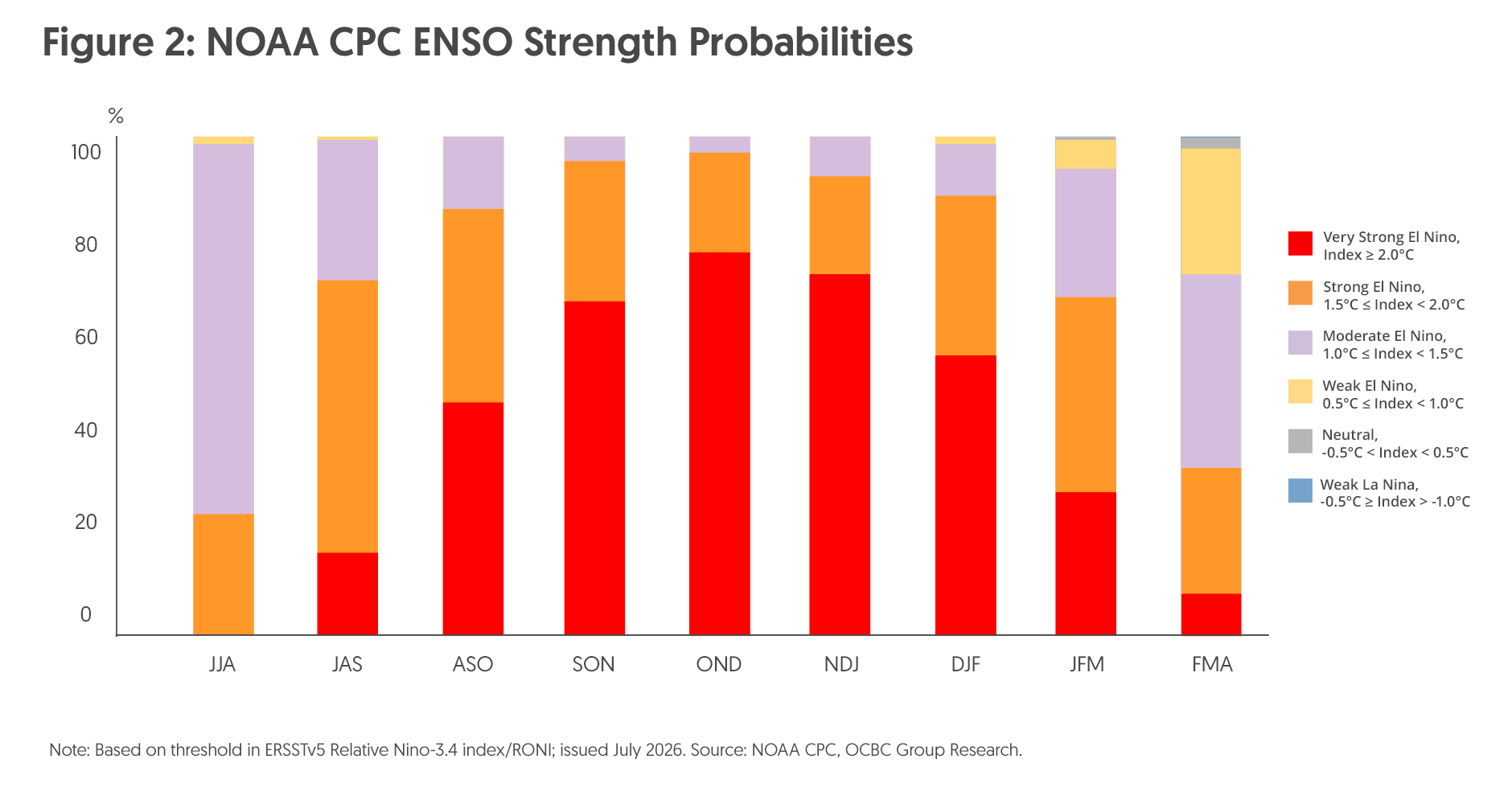
Alongside rising global temperatures, El Niño has officially been declared this year and could be one of the strongest ever recorded (Figure 1). The National Oceanic and Atmospheric Administration’s (NOAA) Climate Prediction Centre (CPC) El Niño/Southern Oscillation (ENSO) update in July shows a high chance that the El Niño will strengthen through the end of the year, persisting through early spring 2027 (Figure 2). The strength of an El Niño event does not translate uniformly into local impacts, but the outlook raises the risk of hotter and drier conditions, rainfall disruption and greater water stress in parts of Southeast Asia.
Agriculture as a case study: The case for climate adaptation
Agriculture provides a clear illustration of how climate risks can evolve into macroeconomic risks. Amid disruptions to energy and fertiliser markets associated with the Middle East conflict, El Niño-related heat and rainfall variability could further intensify agricultural and food price pressures (Figure 3). Lower rainfall and increased water stress may weaken production, while elevated energy and fertiliser prices raise the cost of maintaining farm productivity.
The immediate risk is not necessarily a region-wide food shortage, but a gradual accumulation of pressures through higher input costs, weaker farm margins, more uncertain yields and potentially greater import needs. These risks are significant as agriculture remains a key contributor to food security, employment and rural incomes across Southeast Asia. In addition, food accounts for a substantial share of household spending in many Southeast Asian economies, particularly among lower-income households.
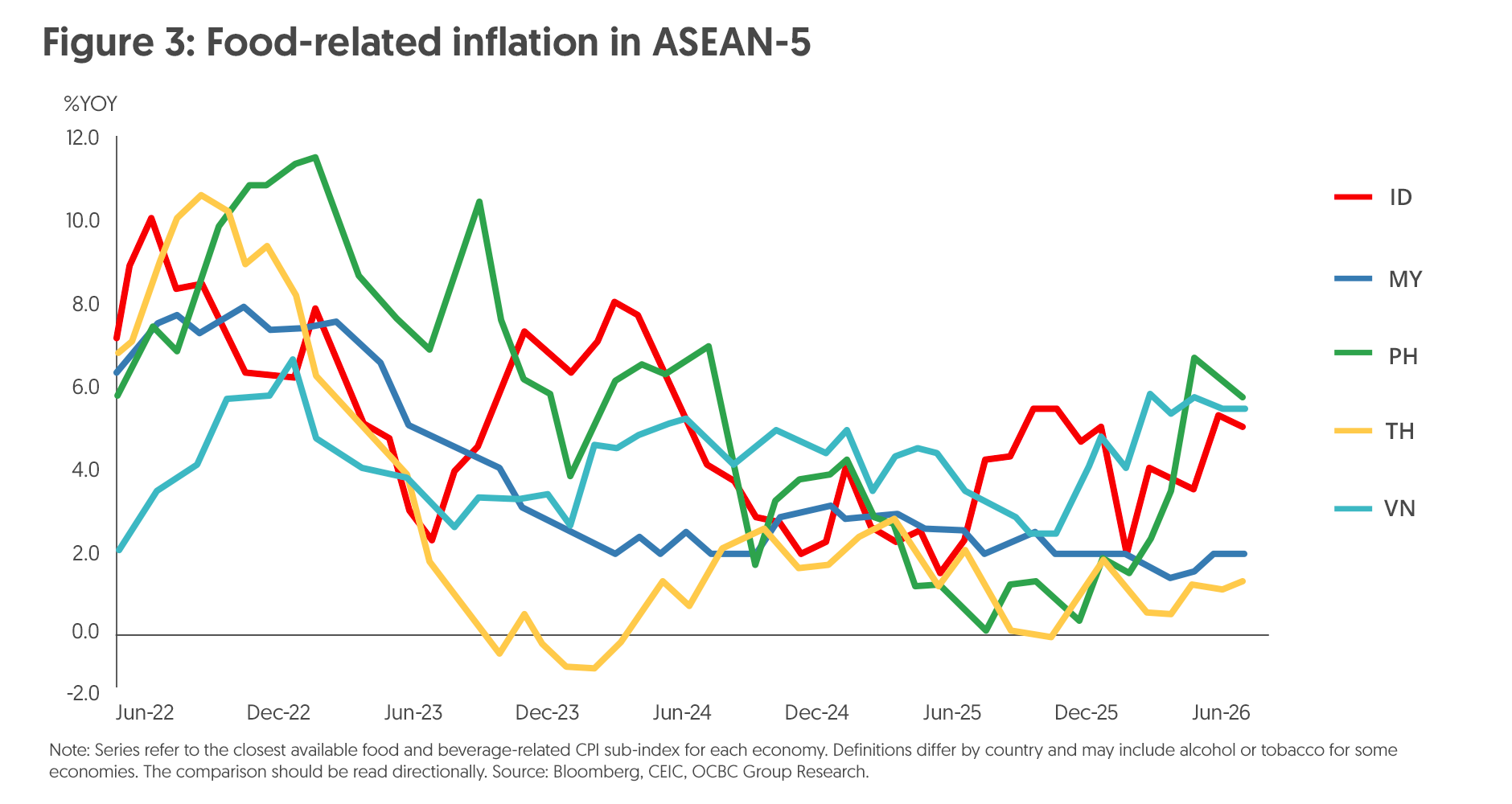
The food-price pass-through may not be immediate or uniform. Reduced fertiliser application, delayed planting or inadequate water availability could weaken subsequent harvests. Lower agricultural output can weaken rural incomes and consumption, increase government spending on support measures and complicate inflation management. This strengthens the economic case for climate adaptation.
Investments in efficient irrigation systems, water storage, climate-resilient crops, early-warning systems and agricultural logistics, when designed around local conditions, can reduce the extent to which weather disruptions translate into output losses and inflation. Improved climate information and timely access to finance can also support planting, irrigation and input-use decisions before losses materialise.
Agricultural ministers in ASEAN have reaffirmed the need to keep essential goods flowing, including food, fertilisers and agricultural inputs, while the ASEAN Food, Agriculture and Forestry Sectoral Plan 2026 to 2030 identifies resilience, sustainable agricultural and climate adaptation as key medium-term priorities in the region. Recent efforts to strengthen energy and food security amid geopolitical tensions in the Middle East further underscore the importance of these objectives.
Despite growing recognition of the need for climate adaptation, significant barriers remain, including inadequate financing and knowledge gaps. These challenges are particularly pronounced for countries facing the greatest climate risks, including small island states, low-lying coastal economies and many developing countries, which are often disproportionately exposed to climate-related shocks while lacking the financial and infrastructural resources to adapt effectively.
Prioritising adaptation frameworks and finance
As climate change impacts continue to intensify, climate adaptation has moved from the sidelines to the forefront of climate discussions, emerging as a critical area of risk management for many countries.
Within ASEAN, climate adaptation planning is increasingly being integrated into national climate strategies and regional cooperation frameworks (Table 1). Many ASEAN member states have submitted their National Adaptation Plans (NAPs) to the United Nations Framework Convention on Climate Change (UNFCCC), with priorities including food security, coastal protection, infrastructure resilience and public health.
Table 1: Formal NAP status and priority areas for ASEAN member states
| Country | Formal NAP status | Key areas for building resilience |
|---|---|---|
| Brunei Darussalam | NAP established (2025) | Agriculture and food security, biodiversity and environment, health and livelihoods, infrastructure and urban resilience, marine and coastal resilience, water resources |
| Cambodia | NAP established (2021) | Agriculture and food security, water sources, coastal zones and infrastructure |
| Indonesia | NAP established (2025) | Food, water, energy, health and ecosystem security, supported by disaster risk management enablers |
| Lao PDR | NAP established (2025) | Agriculture, forestry and land use change, infrastructure and urban development, energy, water resources, public health |
| Malaysia | Developing NAP to complement the Climate Change Act | Water and coastal resources, agriculture and food security, infrastructure and cities, forestry and biodiversity, public health |
| Myanmar | National Adaptation Programme of Action (NAPA) (2012) | Agriculture, early warning systems, forest, public health, water resources, coastal zones, energy and industry, biodiversity |
| Philippines | NAP established (2024) | Water resources, health, ecosystems and biodiversity, cultural heritage and population displacement, land use and human settlements, livelihoods and industries, energy, transport and communications |
| Singapore | Developing NAP, planning to publish in 2027 | Heat resilience, flood protection, water conservation and local produce (focus areas for the S$5mm Climate Adaptation Package under the SG Eco Fund) |
| Thailand | NAP established (2023) | Water resources management, agriculture and food security, public health, natural resources and management, human settlements and security |
| Timor-Leste | NAP established (2021) | Water security, environmental degradation, food security and agriculture, life and safety, human and livestock health, coral reef ecosystems, infrastructure |
| Vietnam | NAP established (2025) | Agriculture and food security, water and land resources, infrastructure and urbanisation, public health and social security, ecosystems and biodiversity |
Source: NAPs submitted to the UNFCCC, The Edge Malaysia, Ministry of Sustainability and the Environment (Singapore)
As many climate-related risks transcend national boundaries, ASEAN has increasingly strengthened regional cooperation on weather and climate information-sharing, early-warning systems and disaster risk management e.g. ASEAN Multi-Hazard Early Warning System. Such efforts can improve regional preparedness and support more coordinated responses to climate-related shocks.
Against this backdrop, scaling up adaptation finance has become increasingly important at both national and international levels. On a global scale, Article 7 of the 2015 Paris Agreement established the Global Goal on Adaptation (GGA). However, limited progress was made over the years until an overarching GGA framework was introduced at COP28, named the UAE Framework for Global Climate Resilience. Climate adaptation was then featured prominently across the COP30 Action Agendas last year, with a focus on directing capital toward adaptation solutions and aiming to triple adaptation finance by 2035. The new target increases adaptation finance to US$120 bn annually, as part of a broader US$300 bn annual climate finance goal. Parties adopted a set of 59 Belém Adaptation Indicators to measure progress, with reporting on these indicators serving as input to the global stocktake.
Addressing barriers critical to delivering adaptation action
While these developments represent important progress in establishing adaptation goals and financing commitments, a substantial gap remains between ambition and implementation. Efforts to achieve the GGA continue to face significant challenges that need to be addressed:
-
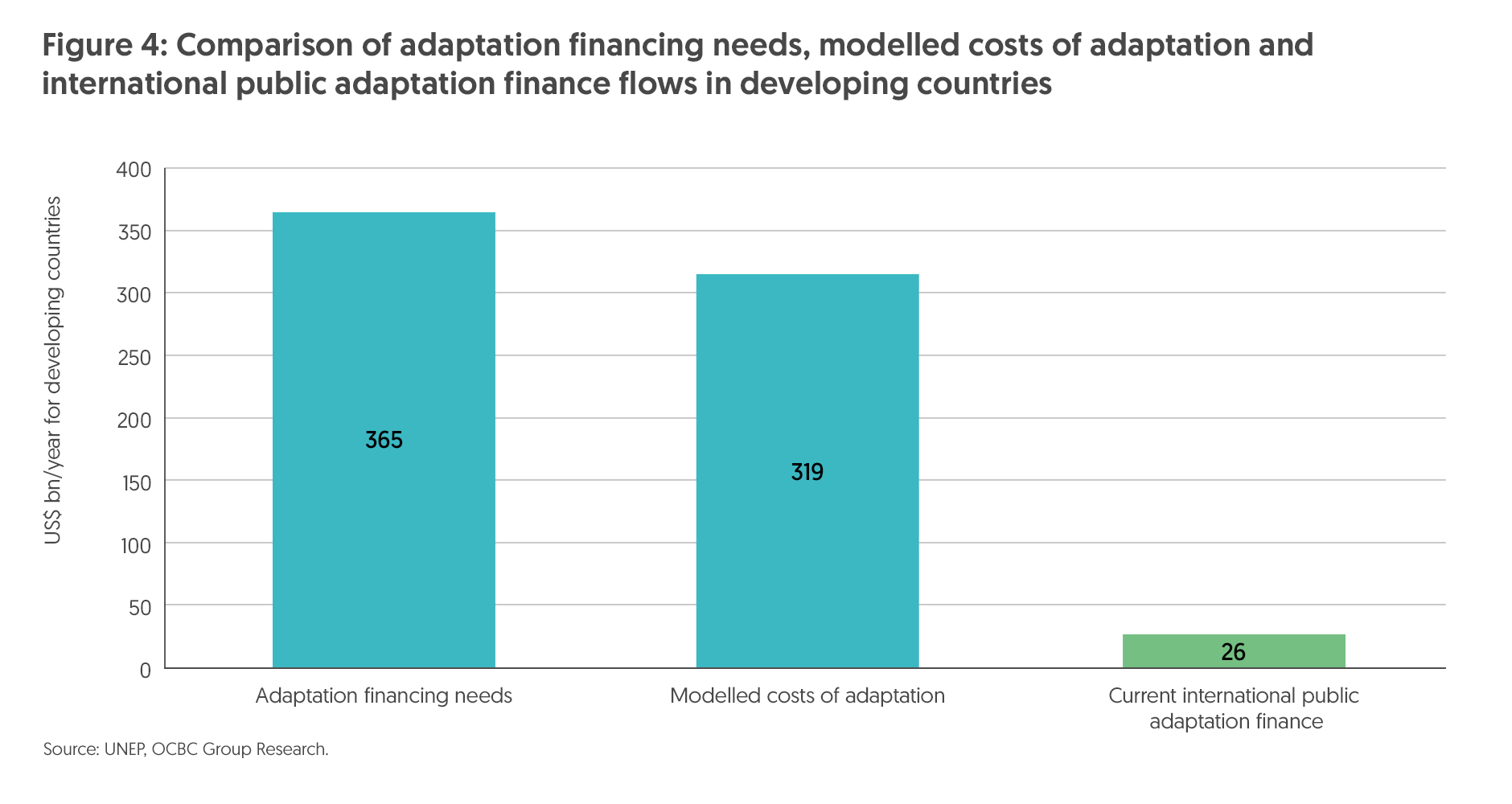
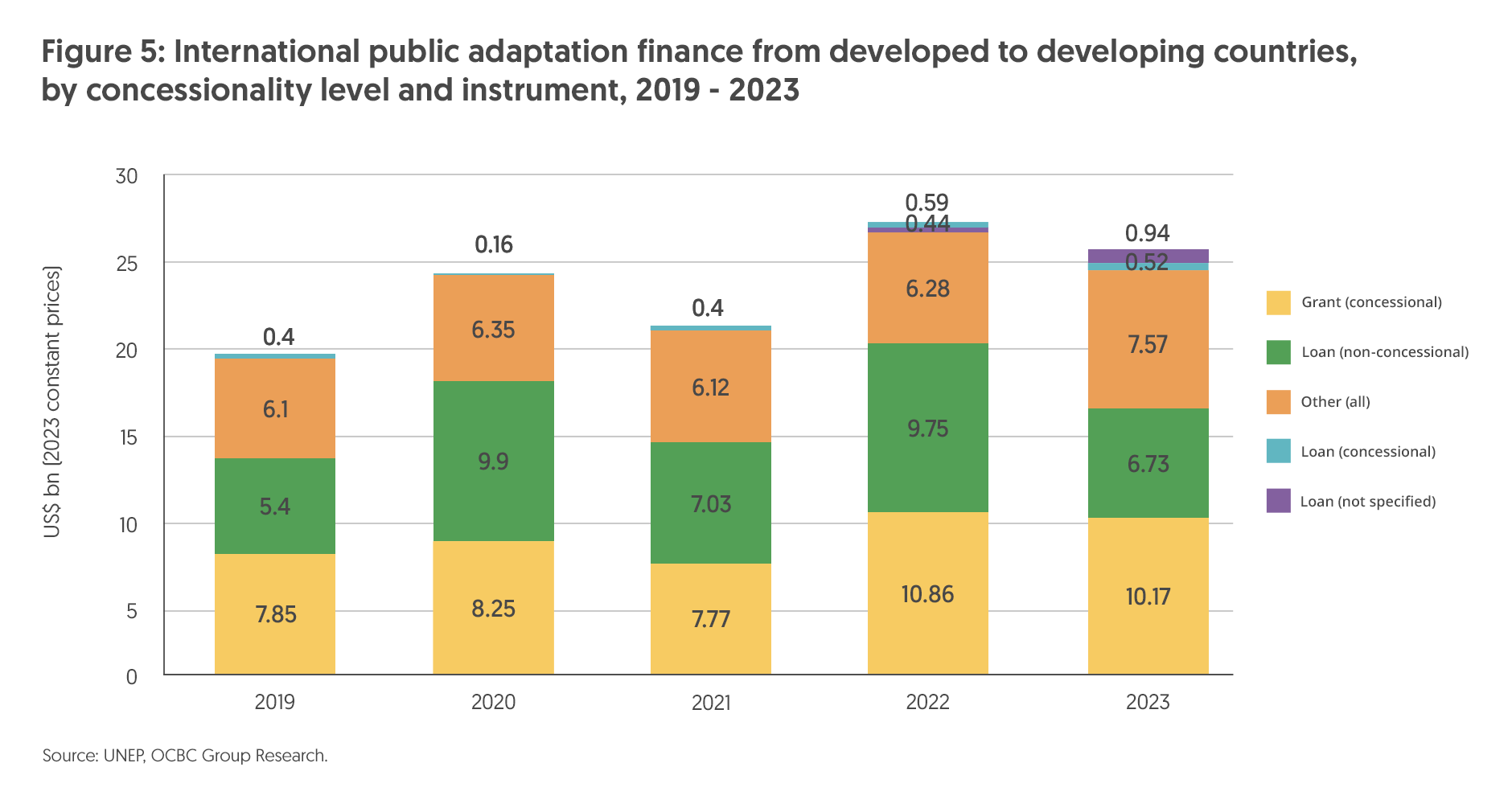
Availability of and access to adaptation finance: The adaptation finance gap is now estimated at US$284–339 bn per year until 2035 (Figure 4), with needs that are 12–14 times as much as current public finance flows, according to the United Nations Environment Programme’s Adaptation Gap Report 2025. Despite growing recognition of adaptation financing needs, the adaptation finance gap has shown little sign of narrowing with debt instruments accounting for a large share of total flows (Figure 5). In particular, non-concessional loans exceed concessional loans, raising concerns about long-term affordability and equity, especially for vulnerable developing countries.
Coupled with targeted policy action, private sector finance can support filling the adaptation finance gap, likely to require blended finance solutions where public finance is used to de-risk and scale up private investment. Beyond the scale and structure of financing, another sticking point at climate talks is determining which countries should bear the costs of adaptation in developing countries.
-
Information and knowledge gaps: Beyond financing constraints, effective adaptation action also depends on reliable climate information. Accurate and robust climate data is not easily available in many developing countries, partly due to fragmented monitoring systems and the lack of technical capacity to develop adaptation plans. Inadequate knowledge of local climate impacts impedes effective national adaptation planning and hinders investment decision-making processes related to climate adaptation.
International efforts are expected to focus on enhancing technical assistance, capability building and knowledge-sharing platforms to support developing countries in strengthening climate data collection and analytical capabilities. These measures can improve adaptation planning and support more effective tracking of progress towards adaptation goals.
Important information
This advertisement has not been reviewed by the Monetary Authority of Singapore. Cross-Border Market Disclaimers