OCBC aims to support 12,000 SMEs across its core markets with sustainable financing by 2028
OCBC aims to support 12,000 SMEs across its core markets with sustainable financing by 2028
At a glance
- OCBC aims to support 12,000 SMEs across Singapore, Malaysia, Hong Kong and Indonesia with sustainable financing by 2028, more than doubling the 5,000 supported SMEs in 2025.
- This is expected to increase commitments from about S$13 billion to S$25 billion, and marks the first SME-specific sustainable finance target by an Asian bank.
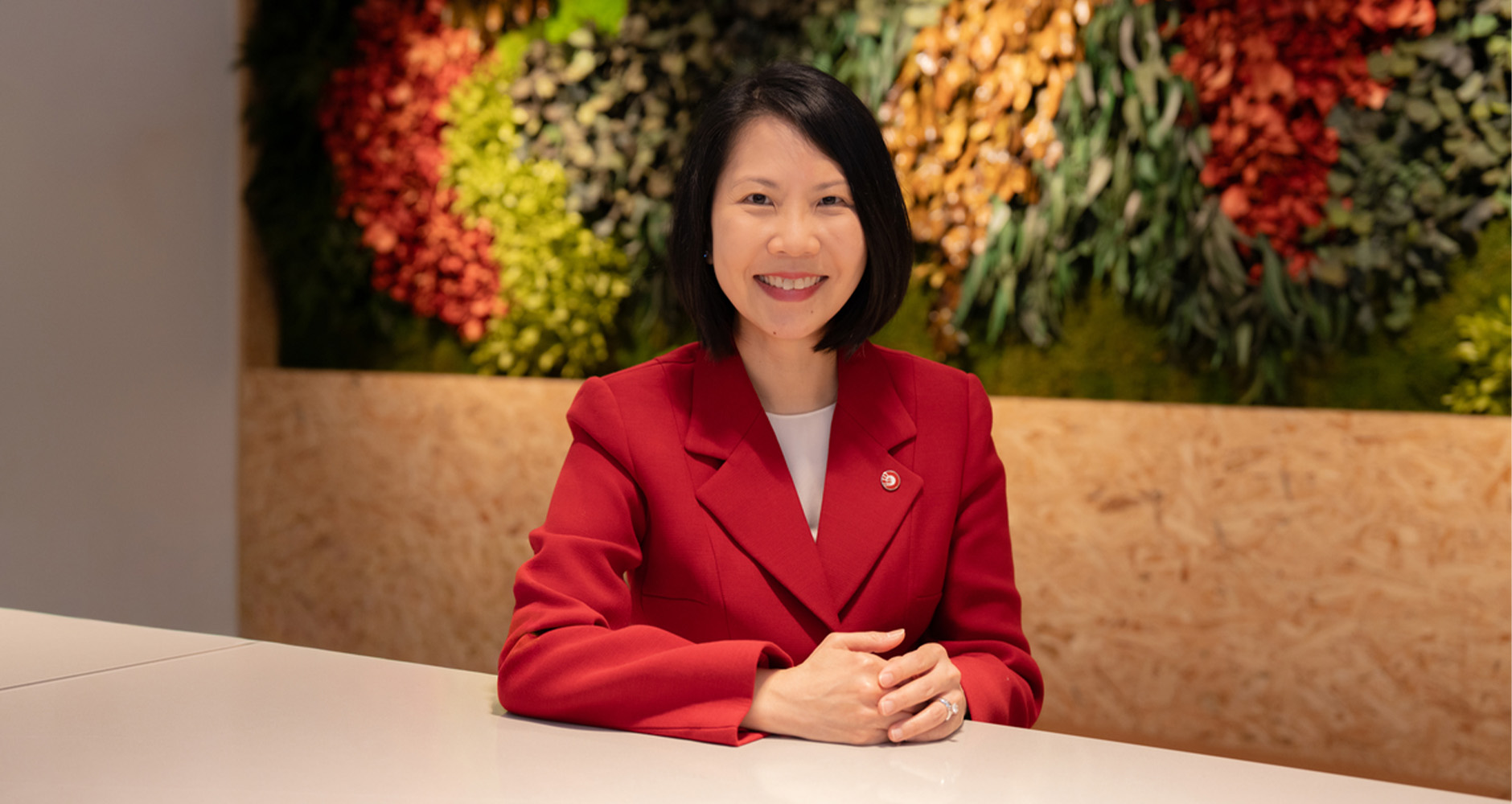
Ms Elaine Heng, OCBC Head of Global Commercial Banking
Singapore, 7 April 2026 – OCBC today announced its ambition to support 12,000 SMEs across Singapore, Malaysia, Hong Kong and Indonesia with sustainable financing by 2028. This is more than double the 5,000 SMEs the Bank supported as at end-2025. Achieving this is expected to drive SME sustainable finance commitments from nearly S$13 billion at end-2025 to S$25 billion by 2028.
This is the first time a bank in Asia has set a sustainable finance target specifically for this segment of customers. This intensified focus on SMEs aligns with OCBC’s new corporate strategy, The Next Frontier, which includes a Net-Zero Shift aimed at strengthening support for their green transition across Asia.
SMEs play a critical role in addressing climate change. Accounting for over 95% of all enterprises in the region and 70% of the workforce, they form an integral part of supply chains and industries that need to work together to deliver the growing scale and pace of emissions reductions for the region.
OCBC’s SME sustainable finance commitments include social loans to women entrepreneurs. Dedicated programmes have been rolled out in the four core markets to enhance the socioeconomic advancement of women and strengthen the growth and resilience of women-owned businesses.
Strong momentum in 2025
The new target also builds on the continued momentum in the Bank’s sustainable finance loan portfolio for SMEs. In 2025:
- The total number of SMEs supported with sustainable financing increased by 34 per cent.
- Total sustainable finance commitments for SMEs grew by approximately 40 per cent.
- The number of sustainability-linked loans extended to SMEs more than doubled, reflecting a growing willingness among business owners to commit to measurable and trackable sustainability improvements at the enterprise level – helping to drive meaningful and long-term impact. Over 70% of these borrowers are small SMEs with less than 25 employees.
Sectors that drove the growth included building and construction, manufacturing, and transport and logistics.
OCBC’s sustainability support for SMEs
The new target is an extension of OCBC’s longstanding efforts to support SMEs across all stages of their sustainability journey with sustainable financing as well as cost-effective and simple-to-use tools.
In 2025, OCBC partnered Enterprise Singapore on the OCBC SME Start-ESG Programme, which aims to help SMEs obtain a baseline measurement of their sustainability metrics and expert advice on sustainability practices, as well as gain access to SLLs from OCBC. Since the launch, over 180 SMEs have been onboarded to the Programme and undergone the assessment, meeting 60 percent of the 3-year target of 300 SMEs in just 12 months.
In 2021, OCBC rolled out the SME Energy Efficiency Assessment (SMEEA) tool in Singapore in collaboration with the Building and Construction Authority. The online self-assessment tool is free-to-use for SME customers and enables them to assess and improve the energy performance of their properties. The SMEEA tool was introduced in Malaysia and Hong Kong in 2024. As of 31 December 2025, over 1,200 SMEs have tapped on the tool for over 1,700 properties.
In November 2020, the Bank introduced the SME Sustainable Finance Framework in Singapore, making it simpler and less costly for SMEs to access sustainable financing of up to S$20 million. It has since been launched in Malaysia, Indonesia and Hong Kong.
Refer to Annex A for more details on how the Bank has supported two SME customers – Atlas Transport & Logistics and Chye Thiam Maintenance – in their sustainability journeys.
Ms Elaine Heng, Head of Global Commercial Banking, OCBC, said: “Across the region, SMEs increasingly recognise that sustainability is not just a compliance requirement, but a strategic business imperative. Many are already taking concrete steps on their transition journeys. Our new and ambitious sustainable financing target for SMEs reflects the growing maturity in this space and builds on the strong expansion of our SMEs sustainable financing portfolio in recent years. We had an early head start in helping SMEs integrate sustainability into their business models, and this remains a strategic priority under our new corporate strategy. Supporting our SME clients in their decarbonisation efforts is integral to how we create long‑term value for our customers as we all work towards a low‑carbon, more resilient future.”
ANNEX A
Atlas Transport & Logistics

One SME that has joined the OCBC SME Start ESG Programme is Singapore-based transport and fleet operator Atlas Transport & Logistics. Its customers, including DHL, are placing greater emphasis on operational efficiency and stronger sustainability performance, even as fuel price volatility — due in part to ongoing geopolitical tensions —continues to squeeze margins.
Through the ESG assessment, Atlas identified emissions as a key sustainability hotspot. With the sustainability-linked loan from OCBC, the company implemented measures to optimise fuel efficiency, such as route optimisation and a broad network of diesel pumps. Atlas also installed carbon-tracking tools to be able to provide customers with emissions data.
Mr Samuel Tey, Managing Director of Atlas Transport & Logistics Pte. Ltd., said: “Sustainability has become a business imperative for us, especially with fuel price volatility from geopolitical tensions. Through the OCBC SME Start-ESG Programme, we have taken steps to explore lower-emissions solutions in our planning pipeline, which we believe will help us build operational resilience and give us an advantage in a highly competitive industry.”
Chye Thiam Maintenance
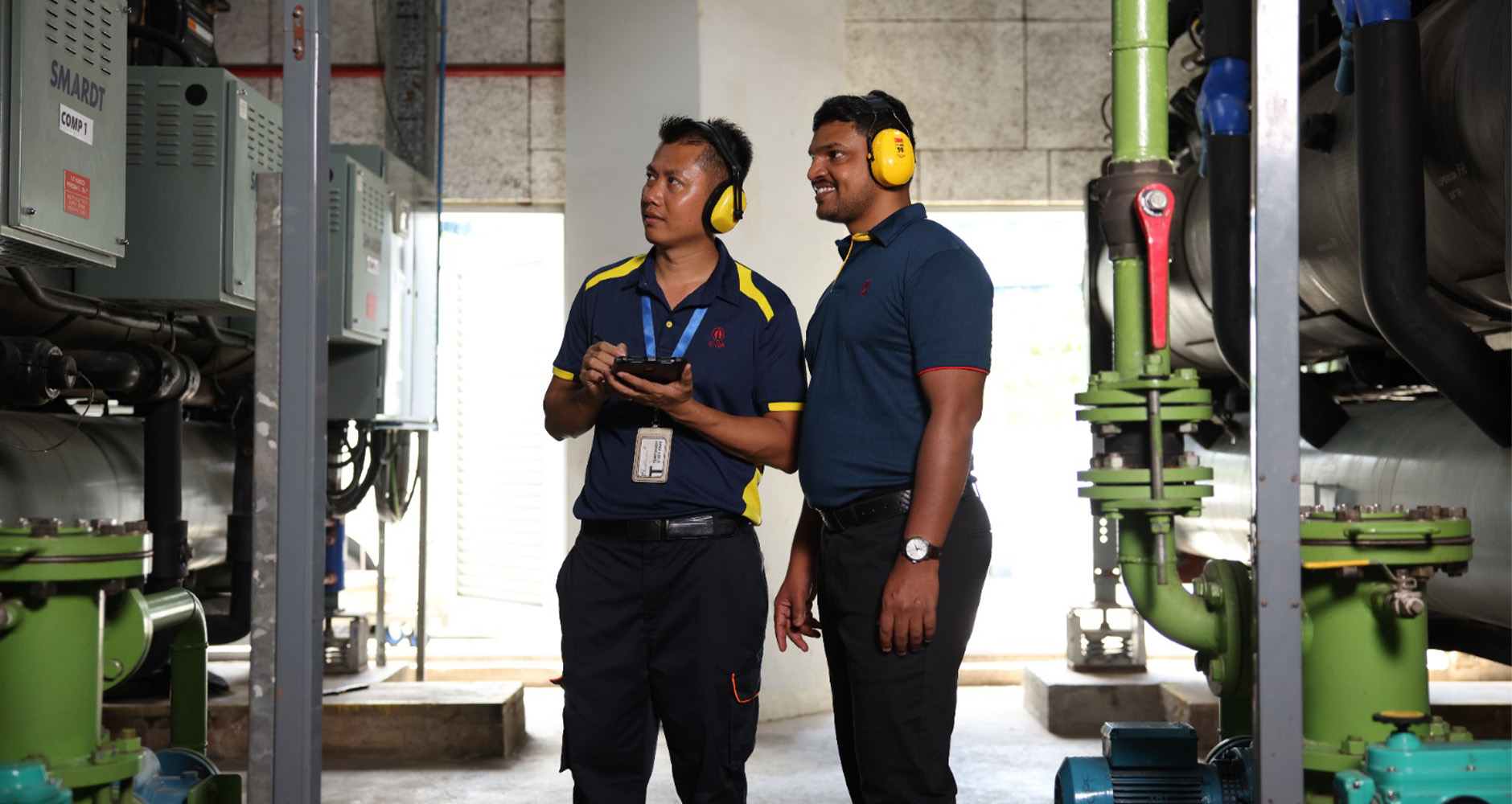
Chye Thiam Maintenance (CTM) has evolved from a cleaning and environmental services contractor into an integrated facilities services provider, delivering bundled services across cleaning, waste management and site operations for large-scale public and commercial assets such as Changi Airport, Resorts World Sentosa and town councils. This shift reflects a move into multi-service integrated facility mandates, where sustainability is embedded into day-to-day operations, optimising manpower, reducing waste volumes and improving resource efficiency at the site level. With OCBC’s support, CTM has scaled this transition, strengthening its ability to take on larger integrated facility services contracts while building out capabilities beyond cleaning & waste management.
Complementing its integrated facility services platform, CTM has invested in material recovery facilities that process recyclables from the sites it manages, supporting a more circular waste model by diverting a meaningful portion of waste away from incineration and extracting value from recoverable materials. On the ground, this is reinforced by the deployment of cleaning robots and pilot programmes for autonomous cleaning vehicles at locations such as Marina Bay, improving productivity in a labour-constrained sector. Together, these operational, infrastructure and technology investments position CTM as a differentiated integrated facilities services provider, combining service delivery with scalable sustainability outcomes aligned with Singapore’s push towards a more resource efficient built environment.
Mr Edy Tan, CEO and second-generation owner of CTM, said: “The support we have received from OCBC has not only helped to accelerate our decarbonisation journey, it has also positioned us as a forward-looking integrated facility services provider. The investments we have made in integrating sustainability across our operations and technology will significantly improve our operational efficiency, reduce emissions and build the infrastructure essential for supporting a lower-carbon future.”